Observation & instruments · UNIR
Multiband observation of extended deep-sky objects in a ProAm context
Observing-time proposal for the Vega del Codorno Observatory: a spiral galaxy, an open cluster, a galaxy with a low-luminosity active nucleus and a planetary nebula, with the choice of filters, exposure times, number of frames and signal-to-noise ratio justified for each object.

Basic information
Abstract. This is an observing-time proposal aimed at planning and observing extended deep-sky objects within a ProAm collaboration (between professionals and amateurs). The project covers the observation of four objects representative of different categories: the spiral galaxy NGC 2403, the open cluster M44, the galaxy NGC 2768, with a low-luminosity active nucleus, and the planetary nebula M97. The main aim is to design a coherent observing strategy that justifies the choice of filters, the exposure times, the number of frames and the signal-to-noise ratio required for each object, taking into account the instrumental limitations and the sky conditions. The proposal places the emphasis on the planning process before the observation, as a fundamental stage of the scientific method in observational astronomy.
Observatory, telescope and instrument. The observation is proposed at the Vega del Codorno Observatory, in the municipality of the same name, in the province of Cuenca (Spain), within the Astronomical Park of the Serranía de Cuenca. The observatory lies at 1538 m above sea level, in a region with one of the darkest skies in Spain, recognised with the Starlight certification, which ensures excellent conditions for deep-sky observation.
The available optical train and instrumentation include a 10Micron GM3000 HPS mount, a Ritchey–Chrétien RC 400 3200 Pro telescope, with a 400 mm (≈ 16″) aperture and a 3200 mm focal length and a ZWO ASI6200MM Pro scientific camera. The system has off-axis guiding with a ZWO OAG-L and a ZWO ASI290MM guide camera. The electronic filter wheel takes LRGB filters (350–950 nm) and 3 nm Hα, [OIII] and [SII] narrowband filters, which gives great observational versatility. The set-up provides a field of view of about 38′ × 25′ and a plate scale of 0.24″/pixel, suitable for extended objects such as galaxies, open clusters and planetary nebulae. The system is controlled with the N.I.N.A. software, widely used in remote observatories for its robustness and flexibility.
Observational details
Time requested. One observing night.
| Optimal dates | Acceptable dates | Unacceptable dates |
|---|---|---|
| January–February (northern winter), on moonless nights or with the Moon in a low phase | Nights with the Moon below first quarter and with enough angular separation from the objects | Nights with a full Moon or with an angular separation below 60° for the low-surface-brightness objects |
Table 1. Observation dates.
Justification of the number of nights and the dates. The four proposed objects can be observed during the same night from the selected observatory, at altitudes above 30°. The total time required, including the science observations and the calibrations, is compatible with a single night. Choosing dates without the Moon or with low lunar illumination is key to maximising the signal from extended objects of low surface brightness.
Weather and sky-quality conditions. Photometric conditions are required, or acceptable thin cirrus, a maximum seeing of ~2″, moderate atmospheric extinction and a dark sky, preferably without the Moon or with a phase below 30 %.
Technical details
Instrument configuration. Scientific CCD camera with filter wheel. Luminance (L), broadband (R, V and B) and narrowband filters (Hα at 656 nm, [OIII] at 500 nm and [SII] at 672 nm) will be used, depending on the object. The field of view must fully cover the apparent size of each object. A standard readout mode that optimises the signal-to-noise ratio will be used.
Scientific justification
Observing extended deep-sky objects makes it possible to address different astrophysical scenarios in a single campaign. In this proposal, four objects were selected that represent different physical processes and evolutionary stages:
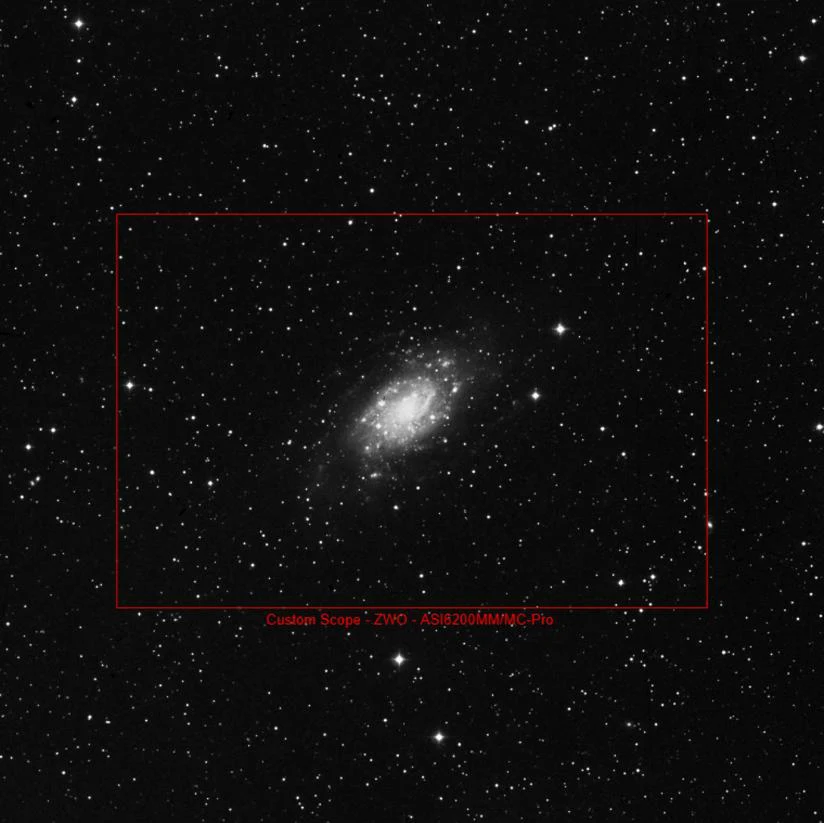
- NGC 2403 is a nearby spiral galaxy, morphologically similar to M33, with well-defined spiral arms and star-forming regions. Observing it in broadband and luminance filters makes it possible to study the stellar distribution and the contrast of the low-surface-brightness structures.
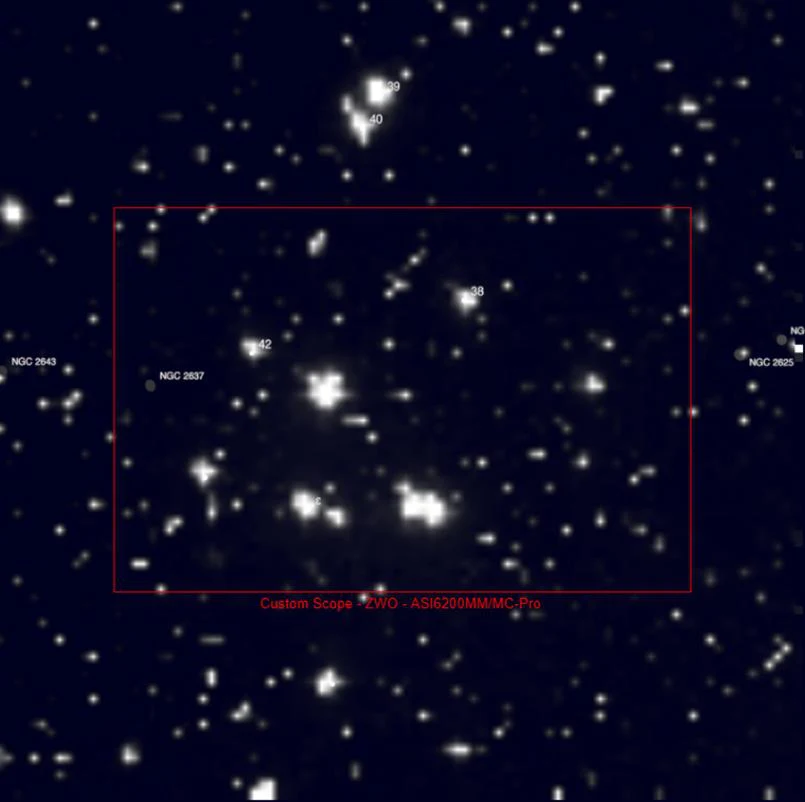
- M44 (the Beehive) is a bright, extended open cluster, made up of stars spanning a wide range of magnitudes. Although it is not a diffuse object in the strict sense, its angular extent and the spatial distribution of its many sources make it an excellent laboratory for studying exposure and dynamic-range strategies in dense star fields.
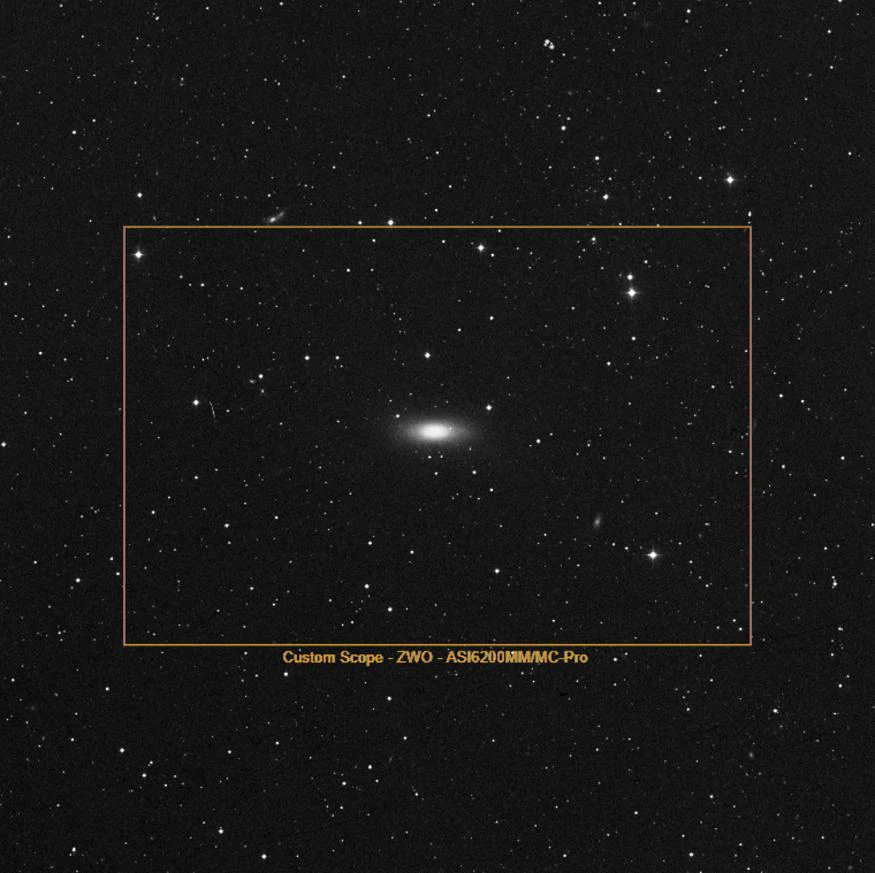
- NGC 2768 is an elliptical–lenticular galaxy (E6/S0) with a low-luminosity active nucleus of LINER type, in which the presence of dust and ionised gas makes narrowband observation especially interesting. Using lines such as Hα, [OIII] and [SII] makes it possible to explore possible emission regions and compare their relative contribution.
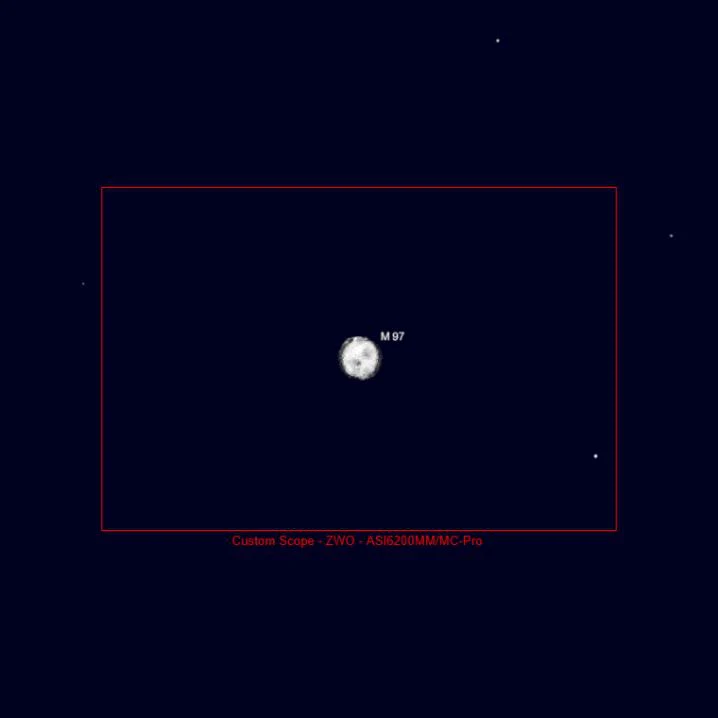
- M97, the Owl Nebula, is a planetary nebula dominated by emission in specific lines. Narrowband observation is essential to bring out its internal structure and the physical conditions of the ionised gas.
Together, these objects make it possible to apply a variety of observational criteria within a single proposal, reinforcing the learning about observation planning and instrument selection in astronomy.
Technical justification
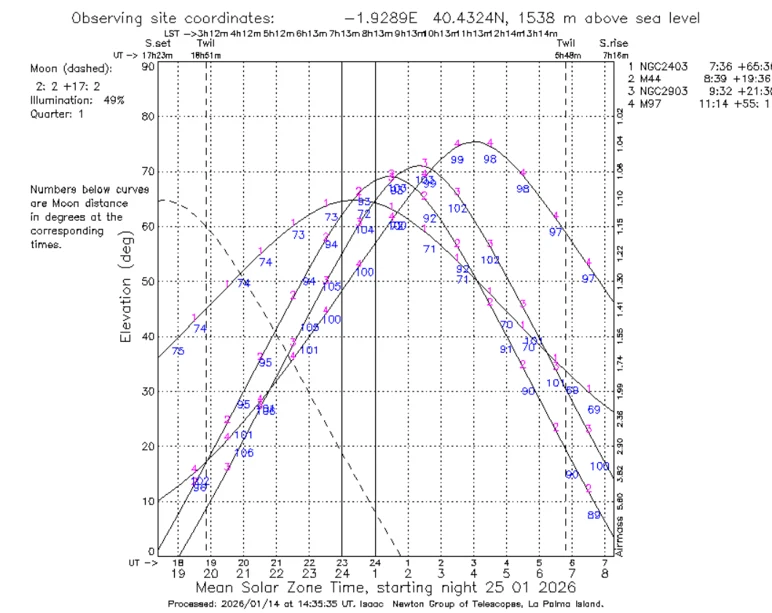
The technical feasibility of the proposal was assessed by considering the apparent magnitude, the angular size and the maximum altitude of each object during the observing night. All the objects rise above 30° altitude, which reduces atmospheric absorption and improves the quality of the data.
The exposure times were estimated with standard CCD calculators. First, the time required for a point source was calculated, and then a multiplicative factor for extended objects was applied. For the narrowband filters, an additional factor was added to compensate for their lower spectral transmission. At least three frames per filter were planned, which allows the images to be stacked and the SNR to be improved. The SNR values given below are those given by the calculator for the integrated signal of each object, not per-pixel values.
The proposed instrumental configuration is standard and compatible with remotely operated telescopes, which ensures the feasibility of the campaign within the time requested.
Detailed observing programme
| Object | RA | Dec | Equinox | Magnitude |
|---|---|---|---|---|
| NGC 2403 | 07:36:51.33 | +65:36:09.65 | J2000 | 8.9 (V) |
| M44 | 08:39:58.4 | +19:36:33 | J2000 | ~3–10 |
| NGC 2768 | 09:11:37.504 | +60:02:13.95 | J2000 | ~9.87 (V) |
| M97 | 11:14:47.71 | +55:01:08.48 | J2000 | ~9.88 |
Table 2. Objects to be observed.
Description of the observing night
The observation will take place during the allocated interval, from 1:00 to 6:00 UTC, that is, 5 hours of observation, entirely within the astronomical night at the Vega del Codorno Observatory on the requested date. Of that time, an estimated 15–20 % will be spent on overheads, mainly filter changes, refocusing, mechanical settling, telescope repositioning and camera readout. The effective scientific integration time is therefore estimated at ~4–4.25 hours. The observing sequence is organised giving priority to the visibility of the objects and ensuring altitudes above 30° in all cases, in order to minimise atmospheric extinction and maximise the signal-to-noise ratio.
- NGC 2403. Nearby spiral galaxy of low surface brightness. It will be observed in the broadband R, V and B filters and with a set of luminance (L) exposures. In each broadband filter, individual exposures of 120 s will be used, with a minimum of three frames per filter, for a total integration time of 360 s. In luminance the same exposure time per frame will be used, giving priority to the detection of the global structure and the spiral arms. The aim is to reach a minimum SNR of the order of 2500–5000 in the broad bands and above 9000 in luminance, values suitable for the morphological study.
- M44. Open cluster to be observed only in luminance, since the main interest lies in detecting stars over a wide range of magnitudes. To avoid saturating the brightest stars and, at the same time, detect the faintest ones, three series of exposures of 15, 30 and 45 s have been planned, with three frames per series. This strategy covers a wide dynamic range, with very high SNR for the bright stars and sufficient values for the faintest.
- NGC 2768. Galaxy with an active nucleus. The strategy combines luminance and narrowband. In luminance, three 120 s exposures will be taken to characterise the global morphology of the galaxy. In addition, the [SII] (672 nm), Hα (656 nm) and [OIII] (500 nm) filters will be used, with individual exposures of 120 s; since it is an extended object observed in narrowband, the corresponding multiplicative factor is applied, up to a total integration time of 1080 s per filter. A minimum SNR of the order of 1500–3000 is required in these filters, enough to detect diffuse emission associated with ionised gas.
- M97. The Owl planetary nebula, to be observed with a combination of luminance and narrowband. In the [SII], Hα and [OIII] filters, individual exposures of 120 s will be used, with three frames per filter and a total integration time of 540 s in each line, giving priority to a minimum SNR above 1500. Luminance will be used as the structural reference channel, with a total integration time of 180 s and SNR above 6000, suitable for bringing out the morphological details of the nebula.
Calibrations. During the session, the standard calibrations needed for processing will be obtained:
- Bias: a full series at the start or end of the night.
- Darks: for each exposure time used (120, 45, 30 and 15 s).
- Flats: specific to each filter (L, B, V, R, Hα, [OIII] and [SII]), preferably acquired during twilight.
- Calibration stars: optional, if needed for photometric control.
Additional comments
In the event of adverse weather, the flexibility of the acceptable dates would allow the observation to be rescheduled. The proposal is designed to be compatible with other remote telescopes of similar characteristics, which increases its robustness and feasibility.
A few months later, one of these objects, the Owl Nebula, could be observed from the Sierra Nevada Observatory.